

By Abdul-Fatah Issah
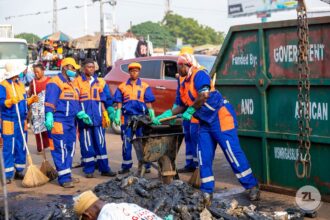
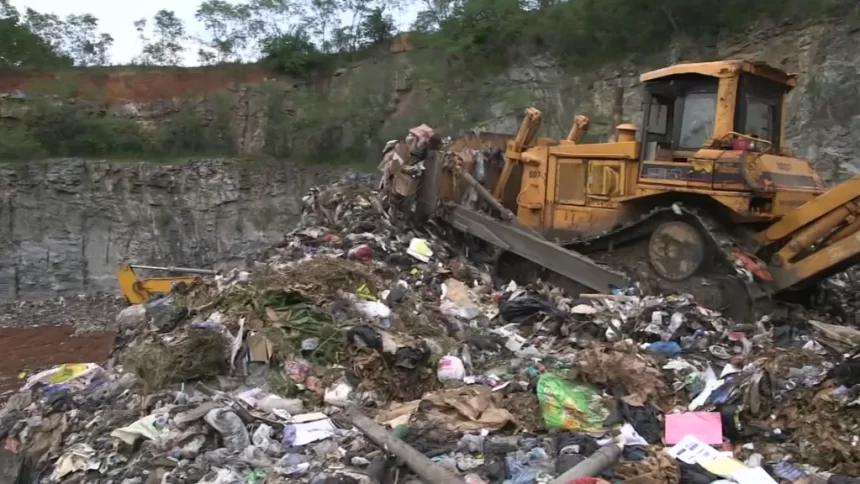
Waste management in Ghana, like sanitation, remains a persistent national challenge. Decades of inadequate collection services, high fees charged by waste companies, and poorly managed landfill sites have left the system struggling to cope. Rapid population growth and economic hardships only compound the crisis.
Related Stories

Successive governments have introduced policies and blueprints to address the problem, but most have gathered dust, with little commitment to enforcement. The Local Government Services Act 656 of 2003 empowers District Assemblies to manage sanitation and waste, yet their work has been undermined by systemic mismanagement.
Investigations by journalist Manasseh Azure Awuni uncovered deep-seated corruption involving Zoomlion Waste Management Company and its affiliates. Since 2006, billions of cedis have been paid to the company—largely through direct deductions from the District Assemblies Common Fund (DACF)—without commensurate improvements in waste management. This arrangement weakened local governments and entrenched a cycle of unaccountability across successive administrations.
While former President Mahama’s directive to decentralize waste management was a step in the right direction, little has been done to demand accountability for nearly two decades of questionable payments. Beyond DACF allocations, Ghana has also received donor and NGO support, yet the state of waste management remains abysmal.
A major part of the problem lies in Ghana’s outdated “collect-and-dispose” approach. Unlike other countries where waste is collected at night (10 p.m.–5 a.m.) to ensure cleaner streets, reduce exposure to foul odors, and avoid traffic congestion, Ghanaian waste trucks operate during peak hours. The result: clogged roads, wasted fuel, accelerated wear and tear on trucks, and unsanitary conditions. Waste management, experts argue, is fundamentally a night business.
The rising use of tricycles (pragya) for waste collection also raises concerns. Though they provide access to difficult-to-reach areas, their frequent overloading, unsafe use on highways, and poor maintenance make them dangerous. At best, they should be restricted to rural or peri-urban communities, and if deployed in cities, limited to side roads and nighttime operations.
With the government’s planned 24-hour economy, waste management could be reimagined as a night-based sector that not only creates jobs but also safeguards public health and the environment. The onus, however, lies on Metropolitan, Municipal, and District Assemblies (MMDAs)—particularly those in urban centers generating the most waste—to enforce efficient systems.
Properly managed, waste collection can move from being a national embarrassment to a source of revenue, employment, and civic pride. What is needed is not more resources, but stronger will and accountability.
Over to you, MMDAs. Over to you, Ministry of Local Government and Rural Development.
By Abdul-Fatah Issah