

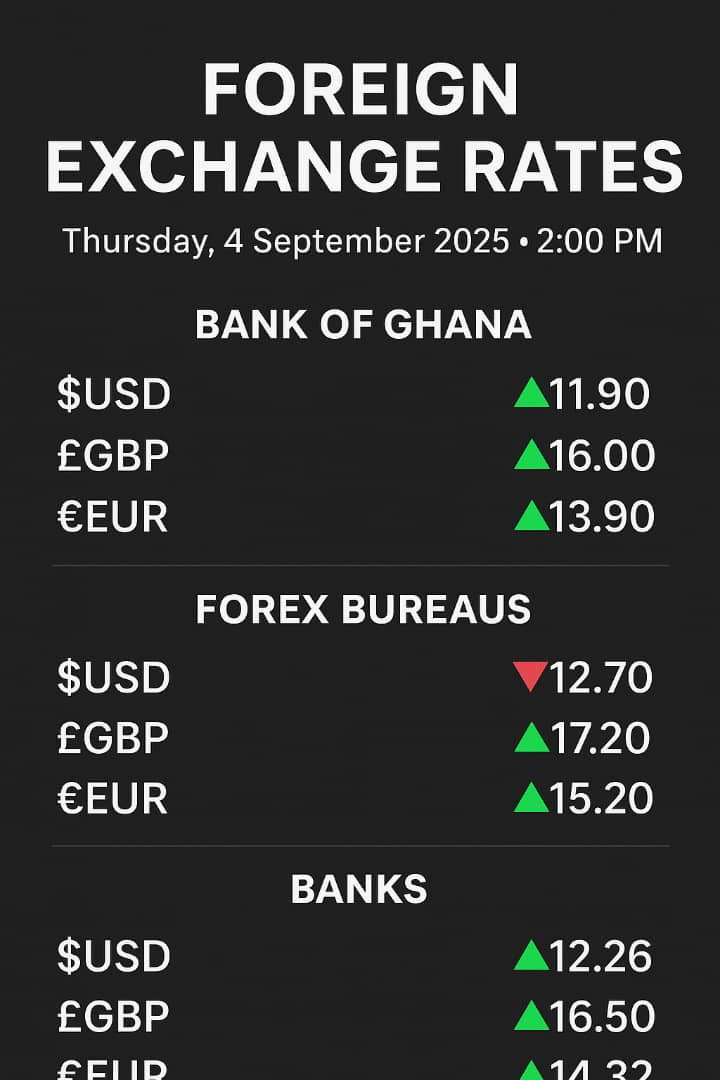
The news has been harsh: Bloomberg has branded the Ghana cedi as the world’s worst-performing currency. On the ground, the numbers tell their own truth—while the Bank of Ghana holds the USD at ₵11.90, commercial banks are selling above ₵12.26, and forex bureaus push further to ₵12.70. For the average Ghanaian, this means rising transport fares, expensive imports, and a tighter squeeze on household budgets. But this is not the end of Ghana’s story.
Understanding the Storm
The cedi’s struggle is not a random misfortune; it is the outcome of structural weaknesses:
– Overdependence on imports and limited industrial output.
– Heavy debt servicing draining foreign reserves.
– Weak confidence in policy consistency.
These realities have pushed Ghana into what feels like a currency storm. Yet history shows us that storms also clear the skies for new beginnings.
Related Stories

●The Recovery Story
Great nations have walked this path before. Vietnam stabilized its dong by tying it to export-led growth. Rwanda rebuilt its franc by diversifying beyond aid dependency into services and innovation. Even Ghana itself has seen rebounds: after 2015, the cedi recovered strength when cocoa and oil inflows combined with fiscal discipline. This means recovery is possible—and it can start now.
●The Way Forward
1. Forex Stabilization Anchors – Create a sovereign stabilization fund tied to mineral and oil revenues.
2. Export-Led Growth – Scale up cocoa value addition, gold refining, and agro-processing to earn hard currency.
3. Import Substitution – Incentivize domestic rice, poultry, and pharmaceutical production to reduce dollar demand.
4. Policy Credibility – Strengthen BoG’s independence and ensure clear, transparent monetary communication.
5. Diaspora Bonds & Remittances – Channel remittance flows into formal systems to boost forex liquidity.
●Stay Hopeful
Yes, the cedi has slipped. Yes, prices are biting. But Ghana’s resilience is written into its history. The same nation that overcame coups, economic collapse in the 1980s, and debt crises can rise again. What is needed now is collective discipline, innovation, and faith in rebuilding our economy’s fundamentals.
“A currency is the heartbeat of a nation’s economy; when it falters, it signals a deeper need for healing at the core. Ghana’s heartbeat is strong—it only needs a renewed rhythm of productivity and discipline.” – Bismarck Kwesi Davis ▪︎#ResettingGhanaSeries