


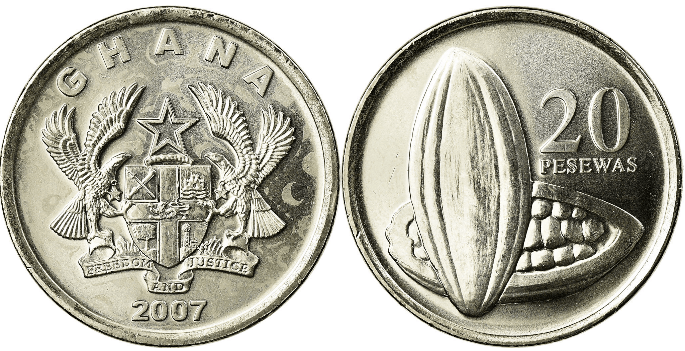
Ghana’s smaller currency denominations particularly 10, & 20 pesewa coins are gradually disappearing from our daily transactions, raising concerns about how and why these lesser currencies are slowly losing their value in the Ghanaian economy.
In recent times, some markets, supermarkets, commercial vehicles and tabletop vendors reject money in these smaller denominations. Reason being that, the lesser currencies have lost their value and therefore cannot be used as a medium of exchange.
Related Stories

The best the traders at shops do, is to round off prices to the nearest cedi. This shows the scarcity and inconvenience of handling small coins.
The Bank of Ghana has acknowledged the trend but says no decision has been made yet to demonetize the lower denominations.
It’s nearly impossible to get change or make purchase in pesewas. When you buy something for GHS9.90, you are told to either forfeit your 10 pesewas or add more in order to get your balance the coins are practically useless. This informal phasing out has affected micro pricing, as goods that used to cost GHS0.30 are now sold at GHS1, eroding purchasing power, especially among our rural and urban poor communities.
Public transport fares, sachet water, and street food prices have all seen minor hikes due to the rounding up effect.
A 2024 survey by the Institute for Fiscal Studies (IFES) disclosed that over 80% of retail and petty traders no longer accept or issue coins below 50 pesewas.
Many banks report that customers rarely request lower denominations at their counters.
Economists warn that the disappearance of pesewas undermines monetary precision, fuels inflation, and affects financial accountability. The Bank of Ghana has previously urged the public to retain confidence in all legal tender and warned that price rounding violates consumer protection laws.
However, enforcement remains weak, and public education campaigns have had limited effect.
Some experts are calling for a formal review of the cedi currency structure.
We need to either reintroduce coins with better design and durability or officially phase them out with proper adjustments,”
Until then, Ghana’s pesewas remain a vital part of our currency and day-to-day transactions.
Source: Cornelius Otoo Xorse